
'Allocate up to 20 per cent of your core equity portfolio to quality funds.'

From the 30-share blue-chip pack, IndusInd Bank, NTPC, UltraTech Cement, Sun Pharma, Axis Bank, State Bank of India, Tata Steel, Power Grid, Adani Ports and Kotak Mahindra Bank were among the major laggards. Tata Consultancy Services jumped nearly 6 per cent after the IT services company reported an 11.95 per cent jump in the December quarter net profit to Rs 12,380 crore. Tech Mahindra, HCL Tech, Infosys and Bajaj Finserv were the other big gainers.

'Investors should consider small and midcaps only if they can handle volatility and have a longer investment horizon.'
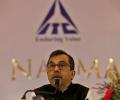
ITC's move to hive off its hotel business will have implications for passive funds and exchange traded funds (ETFs) similar to that seen during the Reliance Industries-Jio Financial demerger. As ITC is part of popular indices such as Nifty and Sensex, it is held by several index funds and ETFs.

From the 30-share blue-chip pack, Bharti Airtel, Power Grid, Bajaj Finance, Nestle, Mahindra & Mahindra, Reliance Industries, Asian Paints, IndusInd Bank, Hindustan Unilever and HDFC Bank were the biggest gainers. Bajaj Finance climbed nearly 2 per cent after the company reported an 18 per cent increase in its consolidated net profit to Rs 4,308 crore for the December quarter.

'Regardless of whether you invest Rs 100 or Rs 1 crore per month, risk is inevitable.' 'Positive returns at the end of the year can never be guaranteed.' 'This is a fundamental truth every SIP investor must grasp.'

Zomato emerged as the biggest gainer, followed by Reliance, Nestle, Asian Paints and Power Grid.

The majority of active largecap funds are set to outperform for the second year in a row in 2024, thanks to the strong performance of their midcap and smallcap allocations.

Trading turnover on NSE IX has been witnessing an uptrend and this momentum is likely to continue thanks to the growing global interest in the overall India growth trajectory, MD & CEO of NSE International Clearing Neeraj Kulshrestha has said. Speaking at the Singapore Fintech Festival (SFF) on Monday Kulshrestha said foreign investors are likely to further increase their participation in GIFT City NIFTY.

This is the case even though the benchmark index is only 5 per cent below its all-time high. The list of stocks trading at a discount primarily consists companies in the automotive, banking, oil and gas, insurance, healthcare, and metal sectors.

As regards mid-caps and small-caps, analysts suggest investors buy only those stocks of those companies where there is earnings visibility for at least a few quarters and where the valuations have become reasonable.

Corporate earnings from blue-chips like HDFC Bank, ICICI Bank, Donald Trump's swearing-in as the US President, and trading activity of foreign investors are the key factors to drive equity markets this week, analysts said. Trump will be sworn in as the US president for a second term on Monday. This week, several key Nifty-50 companies, including BPCL, HDFC Bank, Hindustan Unilever, Dr Reddy's, UltraTech Cement, JSW Steel and ICICI Bank are scheduled to announce their financial results.

Retail investors have been the hardest hit in the recent market downturn, with stocks where they hold over 20% falling 45% from their 52-week highs.

'My advice: Don't mark your portfolio to market every day. Focus on survival.'

The sharp pullback in mid and smallcap stocks signals a cooling-off period in segments that previously attracted considerable investor interest.

Buying stocks during a dip, says Amar Nandu, research analyst, Samco Securities, can lead to higher compounding returns when the uptrend begins.

Following a more than 15 per cent surge in the National Stock Exchange (NSE) Nifty 50 from this year's lows, the spread between the 10-year government security (G-sec) and the Nifty earnings has approached the danger zone of 2 percentage points (ppt). At present, the G-sec yield is roughly 7.09 per cent, while the Nifty earnings are 5.12 per cent. As a result, the spread works out to 1.98 ppt, ever so slightly below the danger mark of 2 ppt.

From the Sensex pack, JSW Steel, Tata Steel, NTPC and UltraTech Cement emerged as major winners, closing the day with a gain of up to 3.33 per cent. On the other hand, Asian Paints, ITC, L&T and SBI were the laggards, ending the session up to 3.95 per cent lower. Of the 30 Sensex stocks, 14 closed the day in green, while on the 50-stock index Nifty 25 scrips ended with gains.

The share of companies where it would take over 100 years for a median employee to earn the equivalent of their top executive's annual salary rose to 65 per cent in FY24 from 61 per cent in FY19.

'Consider 40% to 50% in equities, 10% in gold as a hedge, and the remaining 30% to 40% split between multi-asset funds and hybrid funds.'

'Invest only in stocks of those companies that deliver on earnings and there is earnings visibility too for the next few quarters.'

Stock market investors became richer by a whopping Rs 77.66 lakh crore in 2024, helped by an overall optimistic trend in equities, where the BSE Sensex surged over 8 per cent. Analysts said the year witnessed a tug of war between the bulls and bears marked by volatility but, despite the uncertainties around the world, the Indian markets sustained the pressure and delivered impressive returns.
The market capitalisation of BSE-listed companies soared to an all-time high of Rs 406.52 lakh crore on Monday thanks to a rally in equities where the BSE Sensex climbed over 1 per cent. The 30-share BSE Sensex rallied 941.12 points or 1.28 per cent to finish at 74,671.28. During the day, it zoomed 990.99 points or 1.34 per cent to 74,721.15.
The National Stock Exchange (NSE) Nifty Next 50 Index could undergo large-scale changes if the proposed tweaks to its computation methodology get implemented. In a discussion paper floated recently, NSE Indices, which owns and manages a portfolio of over 350 indices under the Nifty brand, proposed that only stocks that are traded in the futures and options (F&O) segment can be part of the index. Currently, as many as 11 non-F&O stocks are part of the Nifty Next 50 Index, which, as the name suggests, represents the next rung of large and liquid securities after the Nifty50.

The IPO filing-to-approval lapsing ratio this year is the best in three years, underscoring the improvement in the IPO market's buoyancy.

The volume of new fund offerings (NFOs) in 2025 will fluctuate based on market conditions. However, innovation is expected to continue unabated. With an increasing number of fund houses aiming to establish a presence in the 'factor' investing space and changes in fund-of-fund taxation providing more opportunities, several industry-first offerings are anticipated.
The benchmark Nifty and Sensex could see another 8-10 per cent from the current levels, said HDFC Securities in its outlook for equity markets in 2024. The brokerage said that the market movement in the next year will not be linear, and there will be more volatility. When asked about the market reaction to the General Elections in 2024, Dhiraj Relli, managing director and CEO of HDFC Securities, said more than the outcome of the elections, the market movement in the next three to four months will decide the market trajectory post elections.

'The market's sharp decline recently has shaken the confidence of retail investors, leading to increased selling.'

Market reaction to the Union Budget was overall neutral. The income tax "gift" wasn't enough to move the needle. There was some apparent rationalisation of Customs duty structure as well as cuts on import duties of some key components for the telecom and IT industry and duty cuts on vehicle imports. Other proposals related to development of agriculture and rural economy and renewables seem to be generally positive.

Investors will take cues from the December quarter corporate earnings, with blue-chips like Infosys, Reliance Industries scheduled to report their results this week, in addition, inflation data and trading activity of foreign investors will also be crucial in dictating market trends, analysts said.

Domestic institutional investors (DIIs) have infused a record Rs 4.6 trillion into Indian equities over the course of Samvat 2080, marking the highest net annual investment in any Samvat to date. This robust domestic inflow has effectively counterbalanced the comparatively subdued investments from foreign portfolio investors (FPIs), who contributed a net Rs 90,956 crore within the same timeframe. Against this backdrop, the Nifty 50 and BSE Sensex indices are on track to achieve their best performance in three Samvat years, despite recent market corrections.

Investors would track a host of macroeconomic data announcements scheduled this week, including inflation numbers, and also monitor global market trends, and trading activity of foreign institutional investors, analysts said. The ongoing quarterly earnings announcements and the rupee-dollar trend would also influence the markets.

Among the Sensex firms, ITC, Tata Consultancy Services, Wipro, Asian Paints, HCL Technologies, HDFC, Kotak Mahindra Bank, Bajaj Finance, Infosys, Sun Pharma, Hindustan Unilever, Power Grid, Reliance Industries and HDFC Bank were the winners. HCL Technologies climbed 1 per cent after the company on Thursday posted a 10.85 per cent increase in consolidated net profit to Rs 3,983 crore for the fourth quarter of 2022-23. Tech Mahindra, Maruti, Tata Steel, UltraTech Cement, Tata Motors and ICICI Bank were among the laggards.

From the 30-share pack, Hindustan Unilever, Tata Motors, Axis Bank, Nestle India, Asian Paints, ITC, Reliance Industries, Mahindra & Mahindra, IndusInd Bank and State Bank of India were among the laggards. Larsen & Toubro, Tata Steel, JSW Steel, HDFC Bank, Adani Ports, Kotak Mahindra Bank, Bharti Airtel and PowerGrid were among the gainers.

Among the 30-share Sensex blue-chip pack, Bharti Airtel, ITC, Kotak Mahindra Bank, Hindustan Unilever, Titan, UltraTech Cement, HCL Technologies, and Power Grid, were the biggest gainers. Tata Steel, IndusInd Bank, JSW Steel and Bajaj Finserv were the laggards.

'Value index funds are most appropriate for long-term investors who can withstand deeper drawdowns.'

Bajaj Finserv, ICICI Bank, Nestle, UltraTech Cement, Bajaj Finance, Maruti, Tata Consultancy Services, IndusInd Bank and State Bank of India were the major laggards. Infosys, JSW Steel, NTPC and Power Grid were the gainers.

23 Nifty companies reported an annual decline in net profit.

From the Sensex pack, Larsen & Toubro jumped 4.26 per cent to emerge as the biggest gainer, followed by IndusInd Bank, Tech Mahindra, State Bank of India, HCL Technologies, Power Grid, NTPC, Axis Bank, Kotak Mahindra Bank, HDFC Bank and Wipro. Mahindra & Mahindra, Infosys, UltraTech Cement and Hindustan Unilever were the major laggards.

Shares worth over Rs 50,000 crore (or approximately $6 billion) are set to become freely tradable between now and April 10. Historically, such substantial volumes have been absorbed by a buoyant block-deal market.
 © 2026 Rediff.com - Advertise with us - Disclaimer - Privacy Policy - Sitemap - Feedback - About us - Terms of use - Grievances